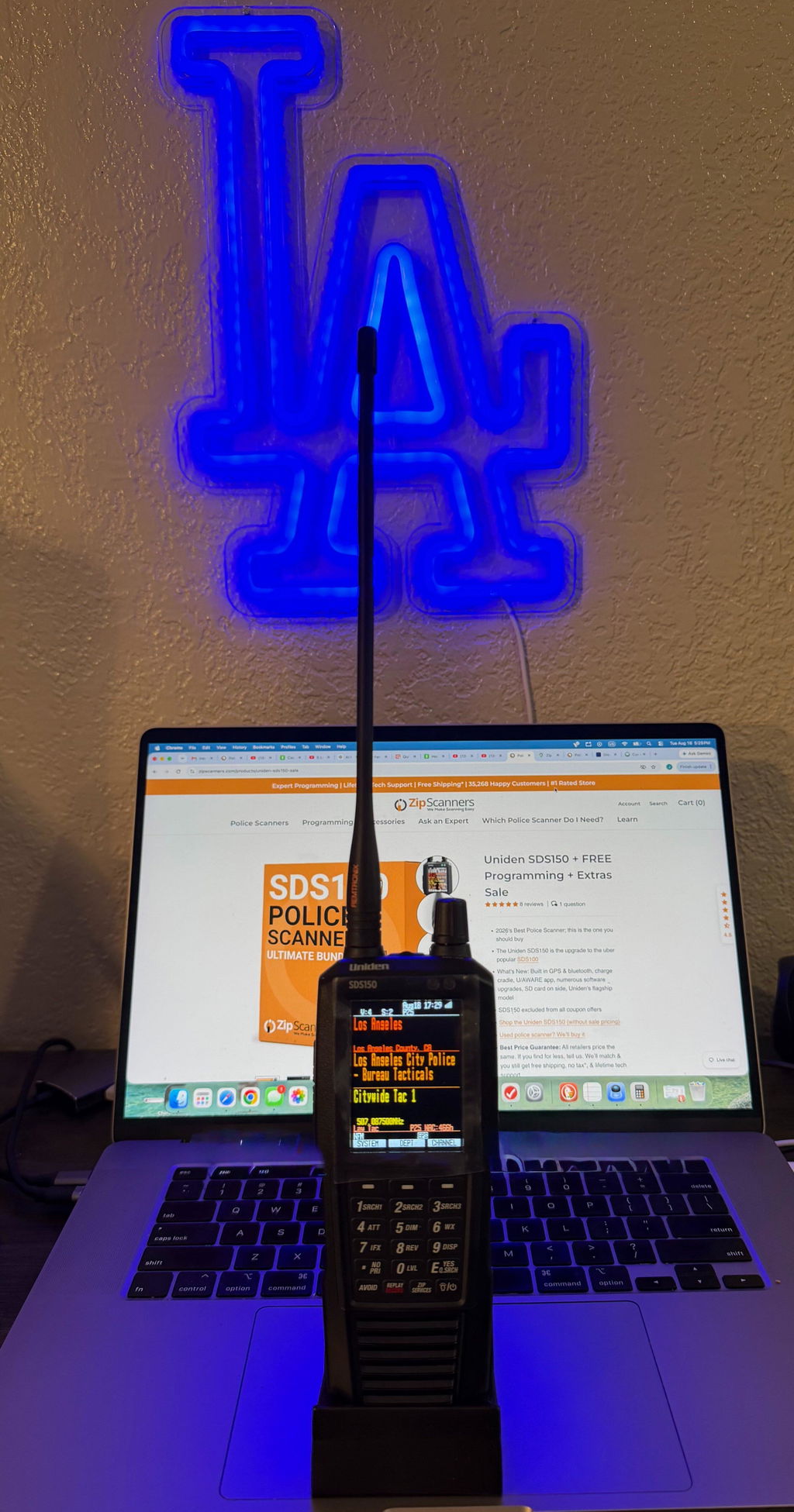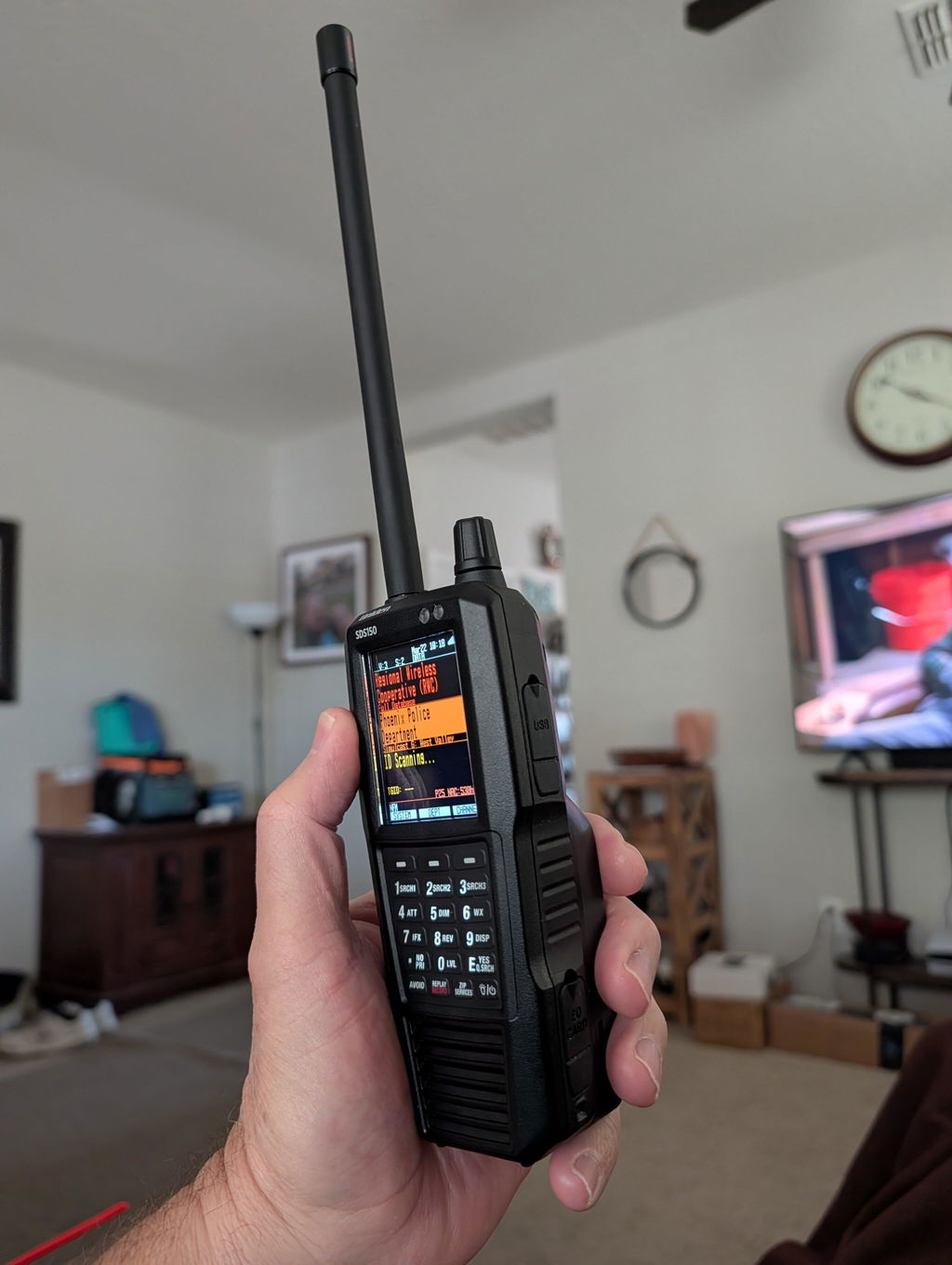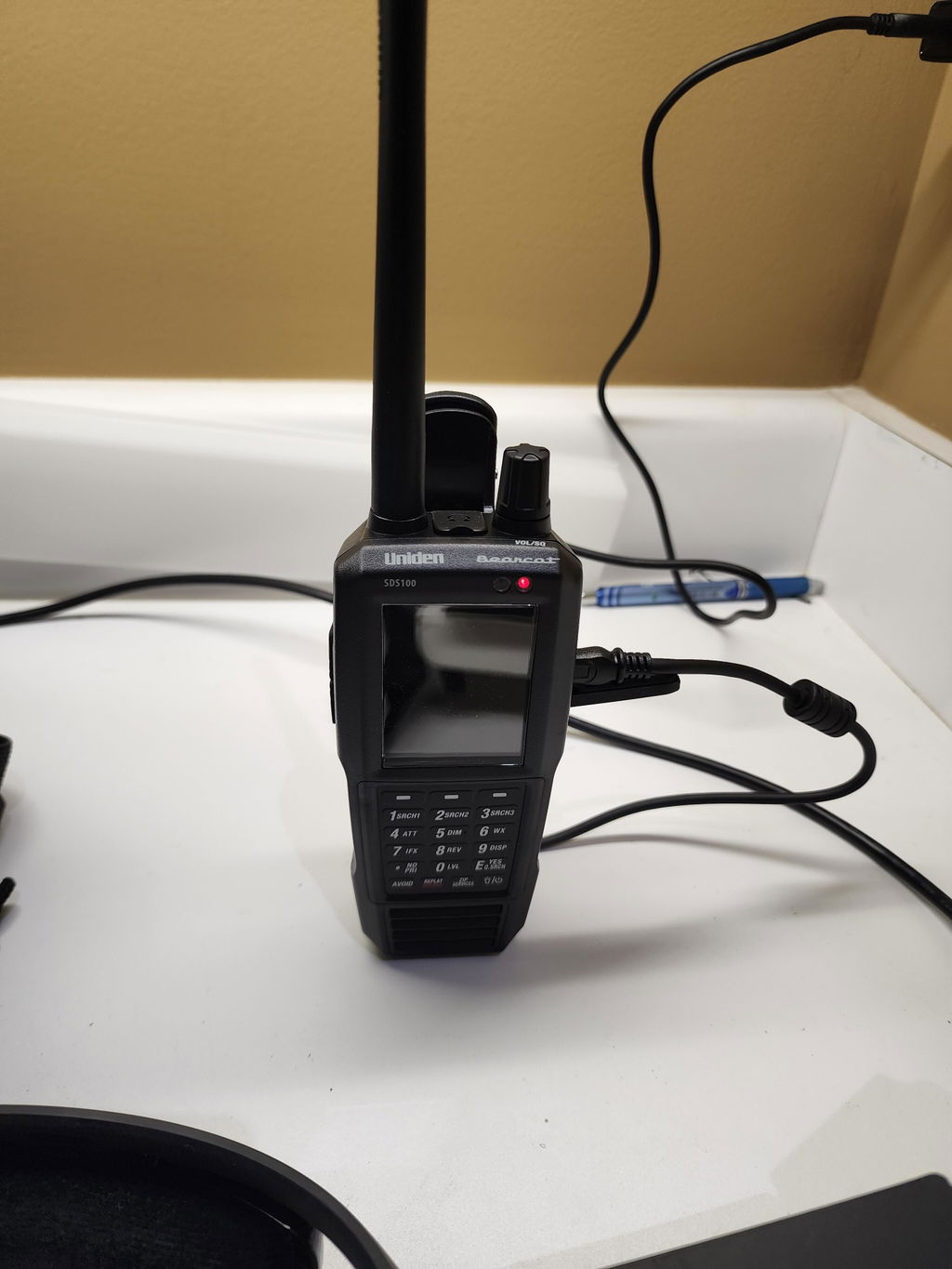
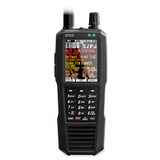
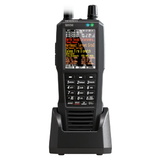
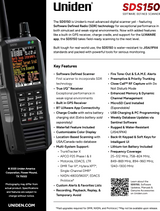

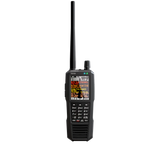
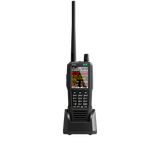
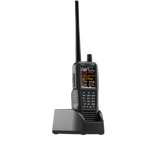
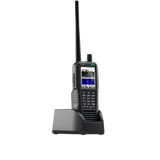
SDS150 Uniden Police Scanner - NEW!

$1,376
  • NOW IN STOCK!
  • 2026's Best Police Scanner; this is the one you should buy
  • The Uniden SDS150 is the upgrade to the uber popular SDS100
  • What's New: Built in GPS & bluetooth, charge cradle, U/AWARE app, numerous software upgrades, SD card on side. Uniden's flagship model
  • Shop the Uniden SDS150 Sale + Free Programming
  • Used police scanner? We’ll buy it
  • SDS150 excluded from all coupon offers
  • Best Price Guarantee: All retailers price the same. If you find for less, tell us. We’ll match & you still get free shipping, no tax*, & lifetime tech support

Short version: If you’re buying a police scanner in 2026, the SDS150 is the smart “buy once” move.

The SDS150 keeps the True I/Q platform that made the SDS100 a legend in simulcast areas, then upgrades the stuff you actually feel every day: built-in GPS, phone control + audio, USB-C, a dock-style charging cradle, & Waterfall upgrade included.

Why that matters: most people don’t quit scanning because the radio can’t decode. They quit because the workflow is annoying (cables, charging, SD card access, tiny-screen navigation, traveling across county lines). The SDS150 is built to remove those friction points.

The SDS150 has 7 practical advantages over the SDS100:

  1. Built in GPS (GPS synced time): location based scanning without buying & connecting an external GPS puck. Great for travel, commuting across jurisdictions, & accurate timestamps in recordings/logs.
  2. U/AWARE phone control + audio: full remote control on a big touchscreen, plus listen on your phone (& route audio to Bluetooth earbuds or your car via your phone).
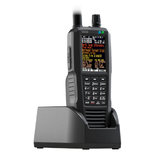
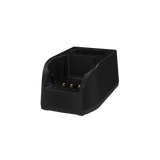
  3. Charge cradle included: drop it in, walk away. The cradle can also charge a spare battery in the second slot (spare battery sold separately).
  4. USB-C charging + programming: one modern cable standard for home, vehicle, power bank, & laptop.
  5. Waterfall included: it ships unlocked. On the SDS100, Waterfall is a separate paid upgrade key.
  6. Less 'filter fiddling' in messy RF: the SDS150 platform adds RF/IF changes aimed at reducing the need to hunt for the perfect filter setting in interference heavy areas.
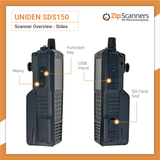
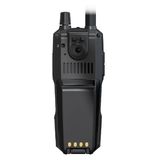
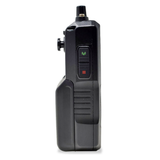
  7. Side access microSD: faster SD swaps & updates without pulling the battery door off (small thing, big quality-of-life upgrade).

Price reality check: if you’re the type who will add GPS, a better charging workflow, & Waterfall to the SDS100 anyway, you end up close to SDS150 money fast. If you want the full-feature, low-hassle setup, start with the SDS150 & be done.

Both the Uniden SDS100 & SDS150 are premium True I/Q (SDR) handheld scanners designed for modern digital trunking & challenging simulcast environments. Neither scanner can decode encrypted police channels.

Quick decision

Choose the SDS150 if you want:

  • The “buy once” flagship with the newest platform & the longest runway
  • Built in GPS for true grab & go travel scanning (no puck, no cable)
  • Phone/tablet control & audio via the U/AWARE app (big-screen control, easier channel discovery)
  • Dock-style charging (cradle included) & USB-C everywhere
  • Waterfall included out of the box
  • Less tweaking in high-interference, RF-dense metro areas

Choose the SDS100 if you want:

  • The lowest upfront price for True I/Q simulcast performance
  • You mainly scan one area (home/desk) & you won’t use GPS or app control
  • You’re fine with cable charging & mini-USB
  • You’d rather add optional upgrades later (GPS, Waterfall, external charger)

Side-by-side comparison

Category Uniden SDS100 Uniden SDS150
Model position Flagship True I/Q handheld (established) Newest flagship True I/Q handheld (next-gen)
Launch window 2018 2025
Price $699.99 $949.99
Receiver architecture True I/Q (SDR) True I/Q (SDR), updated platform
Simulcast + interference handling Excellent True I/Q performance (may require filter tuning in tough RF) Built for stable decoding in simulcast & high-interference areas, with platform changes aimed at reducing tuning/tweaking
Frequency coverage 25–512 MHz, 758–824 MHz, 849–869 MHz, 894–960 MHz, 1240–1300 MHz
Trunking + digital TrunkTracker X, P25 Phase I & II, Motorola, EDACS, LTR TrunkTracker X, P25 Phase I & II, Motorola, EDACS, LTR
Paid digital upgrades DMR, NXDN 4800/9600, EDACS ProVoice (paid keys) DMR, NXDN 4800/9600, EDACS ProVoice (paid keys)
GPS / location scanning External GPS accessory Built-in GPS
Phone/tablet control No official app U/AWARE app via Bluetooth Low Energy (control + audio)
Waterfall display Optional paid unlock Included
Charging + ports Mini-USB charging & PC programming USB-C charging & PC programming
Included charging hardware USB cable (no cradle) Charge cradle with extra battery slot
microSD access Behind battery door Side access under rubber flap
Water resistance JIS4 / IPX4 JIS4 / IPX4
Recording + replay Yes Yes
Encrypted police audio No No

Key differences that actually matter

1) The daily workflow (charging, cables, SD card)

  • SDS150: dock it in the cradle, charge it, optionally keep a spare battery topped off, & the SD card is quick-access on the side.
  • SDS100: cable charging, no included cradle, SD access requires pulling the battery door.

Zip Scanners’ take: if you’ll actually use your scanner daily or weekly, the SDS150’s workflow is the upgrade that keeps you using it.

2) Phone/tablet control (easier listening)

  • SDS150: U/AWARE gives you real control, a big-screen UI, & audio on your phone (then to earbuds or car Bluetooth through the phone).
  • SDS100: no official app-based control/audio.

Zip Scanners’ take: this is the difference between “scanner hobby UI” & “modern device UI.” It’s also the cleanest way to listen discreetly in a vehicle or around the house.

3) GPS that you will actually use

  • SDS150: built-in GPS means travel scanning is always ready, no accessories, no cable mess.
  • SDS100: supports external GPS, but it’s an add-on.

Zip Scanners’ take: built-in GPS changes behavior. People skip external GPS. People use built-in GPS.

4) Waterfall included vs paid add-on

Zip Scanners’ take: if you like finding activity fast (air, rail, events, unknown freqs), Waterfall stops being “nice to have” & becomes “why didn’t I have this sooner.”

5) RF performance in the real world (simulcast + interference)

  • SDS100: proven True I/Q performance in simulcast & weak-signal areas.
  • SDS150: Uniden positions the platform for stable decoding in simulcast & high-interference environments, plus early owners report less tweaking & clearer audio in RF-dense areas.

Zip Scanners’ take: both are elite. The SDS150’s edge is “less messing around to get the same or better result.”

6) Price-to-performance (the honest framing)

  • SDS150: costs more, but bundles the upgrades most users end up wanting anyway (GPS, dock charging, app control, Waterfall, USB-C, SD access).
  • SDS100: best value if you keep it simple & stationary.

Zip Scanners’ take: if you’re already spending $700+ for True I/Q, the SDS150 is the one & done flagship. The SDS100 is the “I know exactly what I’m giving up” option.

If you want the most advanced handheld Uniden makes right now, this is it.

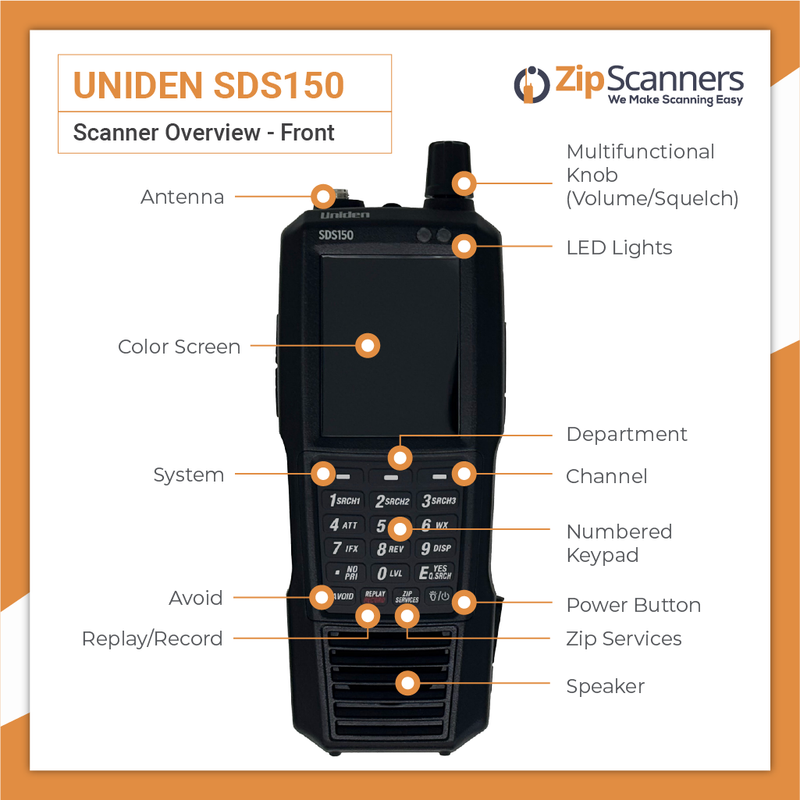
The Uniden SDS150 is a True I/Q digital scanner built to crush simulcast and messy RF environments where older scanners fall apart. It carries the SDS platform performance you already trust, then adds a bigger color display, built-in GPS, an included waterfall, and modern USB-C power so it fits how people actually monitor in 2025.

Enter a zip code or let the internal GPS handle it and the SDS150 locks onto the right systems using the full USA and Canada database. It tracks APCO P25 Phase I and II, Motorola, EDACS, and LTR. It will also decode DMR, NXDN, and ProVoice with the purchase of the upgrades. Bottom line: you’re covered for almost anything that’s not encrypted.

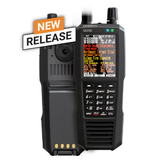
The 3.5 inch customizable color screen plus the built-in waterfall make it easy to see what’s active across the band in real time. Add U/Aware app support and Bluetooth for cleaner mobile monitoring, then stack on the included charge cradle, lithium-ion battery, microSD storage, and Sentinel software support and you’ve got a handheld built for years, not months.

If you’re cross-shopping: the SDS100 is still a killer value if you don’t need built-in GPS/app integration, and the SDS200 is the right move if you want a dedicated base/mobile install.

Pair the SDS150 with Zip Scanners expert programming and you can go from box to live traffic without touching a frequency chart.

Will the SDS150 work in my area?

That depends on what your local agencies use. The SDS150 can monitor analog, P25 Phase I and II, Motorola, EDACS, and LTR trunking. With optional paid upgrades from Uniden, it can also decode DMR, NXDN, and ProVoice. It cannot monitor fully encrypted talkgroups or proprietary systems like OpenSky, and no scanner can.

If you do not want to guess, use our Which Police Scanner Do I Need? tool. We will research your county, check simulcast, encryption, and system type, and tell you if the SDS150 is the right move or if a cheaper model will do the job.

Why should I buy the SDS150 instead of the SDS100?

Think of the SDS150 as the next generation SDS handheld. You still get the same True I/Q architecture and trunking performance that made the SDS100 a beast, but with major usability upgrades: built-in GPS, included waterfall, a larger color screen, USB-C, U/Aware app support, and an included charging cradle.

If budget matters more than built-in GPS and app integration, the SDS100 is still a strong choice. If you want the most capable Uniden handheld today, buy the SDS150.

What digital upgrades do I need?

Out of the box the SDS150 handles analog, P25 Phase I and II, plus Motorola, 

Software upgrades are a subset of digital modes of transmission that affect individual frequencies and, often, countywide trunking systems. If your area, or an individual frequency that you wish to monitor utilizes these modes of transmission, you must purchase the upgrade(s) associated with that county/talk group in order to monitor those broadcasts.

We can look this up for you here.

Can the SDS150 listen to encrypted police channels?

No. The SDS150 cannot decrypt fully encrypted radio traffic, and no legal scanner can. If your primary agency went to full encryption, you will only hear whatever they still broadcast in the clear, if any.

If you have a mix of clear and encrypted talkgroups, the SDS150 will monitor the clear ones and automatically mute the encrypted ones.

Is the SDS150 hard to set up?

Programming scanners can be tedious if you start from scratch, but the SDS platform makes it manageable. The USA and Canada database is preloaded, location-based scanning works by zip code or GPS, and Uniden Sentinel lets you build Favorites Lists on a computer and push them to the radio.

If you want to skip the learning curve, add Expert Programming and we will ship your SDS150 ready to scan your area.

How rugged and weather resistant is the SDS150?

The SDS150 is built as a field radio. It is rated water resistant to JIS4 / IPX4 when covers are closed, so it can handle rain and splashes. It is not designed to be submerged.

Is the SDS150 future proof?

Nothing in radio is completely future proof, but the SDS150 is about as close as it gets today. Its True I/Q SDR platform is designed for modern simulcast P25,DMR, NXDN, or ProVoice. Sentinel updates keep your database current.

If agencies in your area migrate to full encryption, no scanner will help. Short of that, the SDS150 is a long-term play.

Major SDS150 vs SDS100 differences

  • Built-in GPS: SDS150 has GPS onboard for true location-based scanning. The SDS100 needs an external GPS puck and cable if you want that same functionality.
  • Waterfall included: SDS150 ships with the waterfall feature unlocked. On the SDS100, waterfall requires a separate paid key.
  • USB-C: SDS150 uses USB-C for charging and programming. SDS100 uses the older mini-USB setup.
  • Charging cradle: SDS150 includes a desktop charge cradle with an extra slot to charge a spare battery. SDS100 does not include a dock.
  • Bigger color screen: SDS150 has a larger, brighter customizable display that’s easier to read at a glance.
  • Refined RF performance: Same True I/Q core as SDS100, but tuned for cleaner performance in heavy RF and simulcast environments.

If you already own an SDS100 and mostly monitor one area from home, you probably don’t need to upgrade. If you travel, storm chase, or want the cleanest all-in-one Uniden handheld, the SDS150 is the better tool.

Major SDS150 vs SDS200 differences

  • Handheld vs base/mobile: SDS150 is a portable handheld with an internal battery. The SDS200 is a base/mobile unit meant for home setups or permanent vehicle installs.
  • Power and install: SDS150 runs on battery or USB-C. SDS200 uses AC or 12V DC and includes mounting hardware.
  • GPS: SDS150 has GPS built in. SDS200 requires an external GPS puck if you want location-based scanning on the road.
  • Connectivity: SDS200 adds Ethernet for network control/streaming. SDS150 leans on Bluetooth and U/Aware app support for mobile use.
  • Best use case: SDS150 is grab-and-go for travel and events. SDS200 is the better anchor radio for a shack, EOC, or dedicated mobile rig.

Both share the same True I/Q platform and TrunkTracker performance, so digital reception is elite either way. Pick SDS150 for mobility. Pick SDS200 for a permanent station.

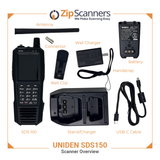
What’s in the box

  • Uniden SDS150 digital handheld scanner
  • Charging cradle with extra battery charging slot
  • Lithium-ion battery pack
  • AC adapter with USB-C port
  • USB-C to USB-C cable (power and PC programming)
  • Pre-installed microSD card
  • SMA type stock antenna
  • SMA to BNC antenna adapter
  • Belt clip
  • Hand strap
  • Quick start guide and Uniden inserts
  • Uniden Sentinel software (free PC download for programming and database updates)

Want it ready to scan out of the box? Add Expert Programming and we’ll ship your SDS150 preloaded for your exact area.

Want to go past “turn it on and listen” and really master the SDS150? Start here. These are the best SDS150 resources we’ve found, all in one place.

  • Uniden SDS150 Owner’s Manual (PDF)
    The official manual straight from Uniden. Covers setup, zip/GPS scanning, Favorites Lists, filters, waterfall, recording, and every menu setting.
    Read the SDS150 Manual
  • Uniden Support Downloads Hub
    Central Uniden downloads page for manuals, firmware, and software across the SDS line.
    Go to Uniden Downloads
  • Sentinel Programming Software
    Sentinel is the free Uniden PC software used to update the database, manage Favorites Lists, and install firmware updates. Treat it like your control center.
    Sentinel Info + Changelog
  • RadioReference SDS150 General Discussion
    The best place for real-world owner tips, firmware chatter, and performance reports in simulcast-heavy areas.
    Read the SDS150 Thread
  • RadioReference: Is the SDS150 worth it?
    Field opinions comparing SDS150 vs SDS100 and what the added GPS, cradle, USB-C, and included waterfall are worth in practice.
    See the Debate
  • SEMA 2025 announcement and early field reports
    Background on why Uniden built the SDS150 and what early testers are seeing vs the SDS100 front end and speed.
    SEMA 2025 Announcement Thread
  • Feature overview video
    Quick visual walkthrough of the SDS150 display, waterfall, cradle, and app connectivity.
    Watch SDS150 Overview

If you want the SDS150 to show up already dialed for your county, add Zip Scanners Expert Programming and we’ll ship it ready to scan.

Still cross-shopping? Here are the closest siblings:

  • Uniden SDS100 — same True I/Q core, fewer travel/GPS/app upgrades.
  • Uniden SDS200 — base/mobile version for permanent installs.

Helpful links: Uniden, Radio Reference thread, Reddit thread, Facebook group, YouTube Playlist, Marks Scanners (Coming Soon)  

Deep dive on programming here.

We HIGHLY recommend letting our experts program your scanner.

Programming issues are, by FAR, the #1 reason for...

  • Returns
  • 99% of any negative comments about the SDS150 & SDS100 you'll read while researching
  • 99% of any negative comments about us
  • 90% + of all support questions
  • Our receding hairlines

Basically, you're about to spend hundreds of dollars on a snappy new gadget, might as well spring a few extra bucks so it will actually work right out of the box.

What is programming?

Scanners work like AM/FM radios in that they pick up airwaves based on a set of specifics frequencies. But unlike a radio there is not the simple 'seek' and 'save' feature on a scanner. Also, the frequencies are wildly different based on where you live and what you want to listen to.

What, specifically, do I get with expert programming?

For each county you purchase, our experts will program the following:

  • State police, fire & EMS
  • County police, fire & EMS

Add as many counties as you'd like.

When your scanner arrives, the programmed data will be on your scanner in easy to navigate lists.

What if your programming does not work?

100% money back guarantee on programming.

Can you program X, Y, Z?

We can program anything in Radio Reference, the world's largest & best frequency database. 

What if I need help after you program?

We’re always here to help with our lifetime tech support. 

Why should I buy programming?

Programming is the #1 reason police scanners are returned.

While scanner programming is much easier than the days of crystal scanners, there is a learning curve like any other electronics purchase. While some scanner enthusiasts are highly technical and want to learn the ins-and-outs of programming, others want their scanner to just "work" right out of the box.

95% of all scanner sales include programming, so unless you’re familiar with scanners, scanner terminology, own a PC (Macs do not work), and want to learn the nuances of programming, we highly recommend letting our experts program your scanner.

Scanner technology is fairly user friendly, but scanners are not smartphones or iPads. If you're spending hundreds on a scanner, we recommend springing a few extra bucks so it works right out of the box.

Can't you teach me programming with your lifetime technical support?

No.

Lifetime technical support is not unlimited technical support. We made "how to" videos and can help point you in the right direction, but we will not teach programming.

How long does your expert programming take?

We usually get this out same day, but it can add 1-2 business days to your shipment.

Can I program this scanner myself?

Yes.

We created a programming decision tree, as well as programming videos, to help you decide whether you should include expert programming with your scanner. With that said, we HIGHLY recommend adding the expert programming to your purchase to save time and spare yourself potential aneurysms.

Can't I just punch in my zip code for programming?

Yes, however...

When you punch in your zip code, it scans EVERYTHING in your area, which is kinda like getting the phone book thrown at you.

With our expert scanner programming, we filter out the junk so you don't have to listen to things such as the dog catcher, repo guy, power company & the like.

How long will it take me to program on my own?

It takes our scanner tech anywhere from 30 minutes to several hours to program each scanner...and this is ALL he does.

For new & moderate scanner users, we estimate 3-12 hours of programming. Setup time varies wildly based on scanner, area and general tech familiarity.

What software comes with my SDS150?

The Uniden SDS150 comes with Sentinel software like other Uniden scanners, including the:

While there is a version of Sentinel software for each scanner, they operate the same. The SDS150 includes Sentinel software (download free SDS150 software here). Watch our Uniden Sentinel software programming video here or above in the video gallery.

Any self-programming tips?

We recommend downloading the software before you buy to test drive.

Customer Reviews

Based on 8 reviews
88%
(7)
13%
(1)
0%
(0)
0%
(0)
0%
(0)
A
Antonio H.
SDS 150

Zipscanners had the SDS 150 in stock so I bought it they got it to me very quickly!! I love it so far!! It’s the best scanner I’ve owned yet!!
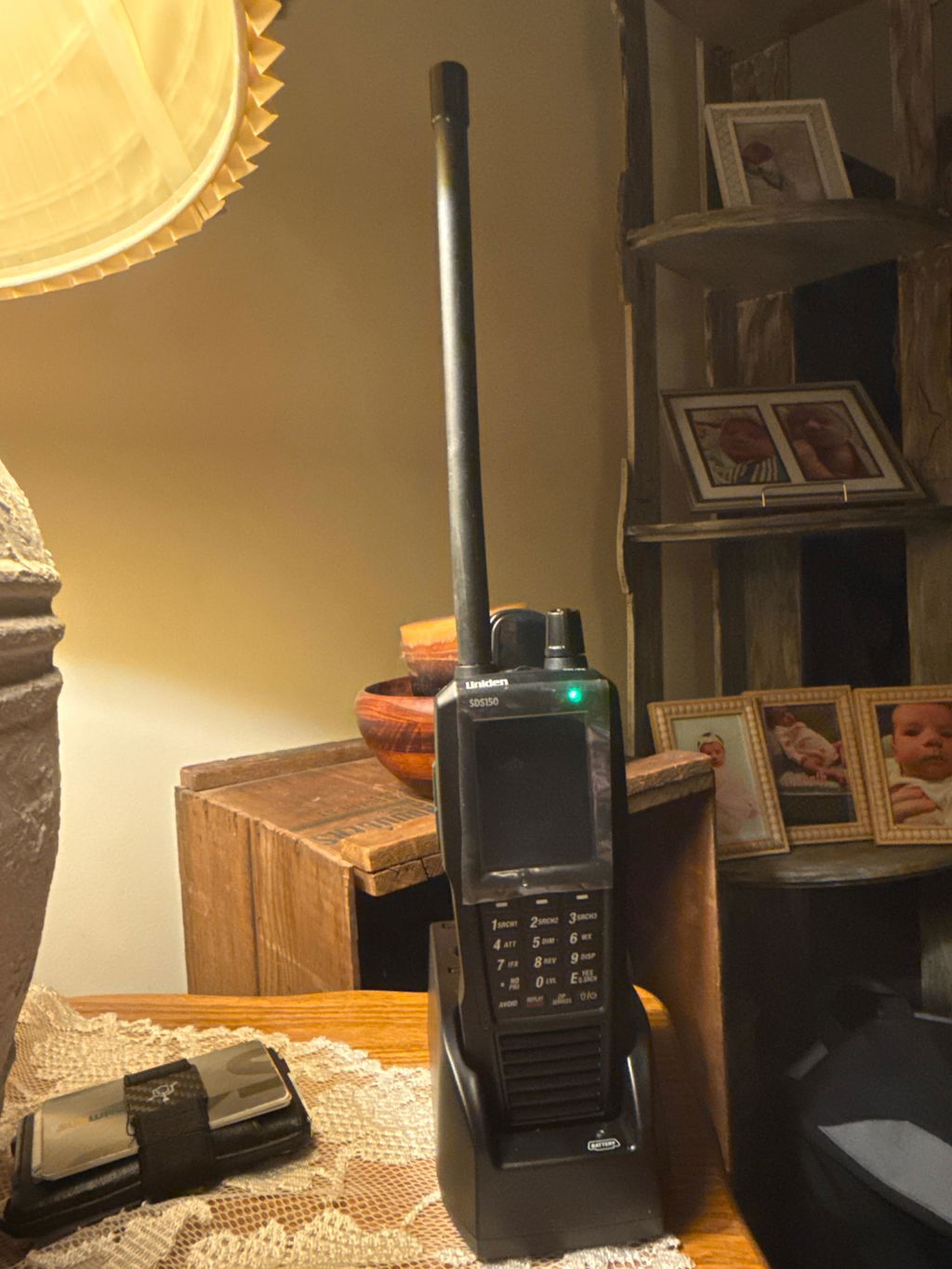
F
Frank O.
Happy with Purchase

Easy ordering and fast shipping. Arrived in just a couple of days.

R
Ryan L.
SDS150

Great team and very happy with the performance of the SDS150.

R
Rebecca
5 stars

Scanner performs well and tech support was helpful in me choosing the right scanner for my area.

M
Mark J.
Better then the SDS100

I own both the SDS100 and the SDS150. I have to say that the SDS150 feel and performs better. I have yet to try the GPS function but the scanner just feel better in your hands. Definitely worth the extra $$$.

Reviews in Other Languages

Recently viewed