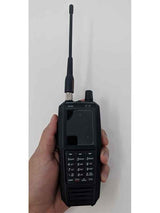
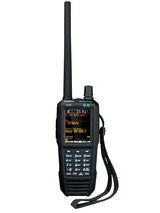
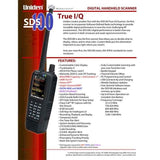
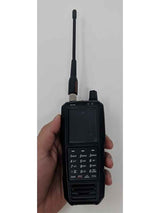
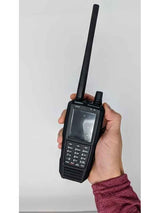
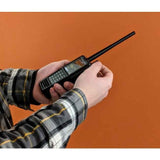
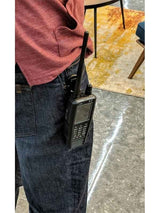
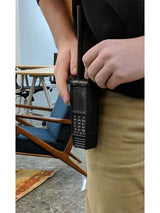
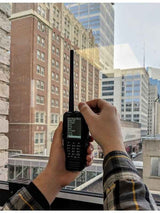
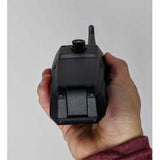
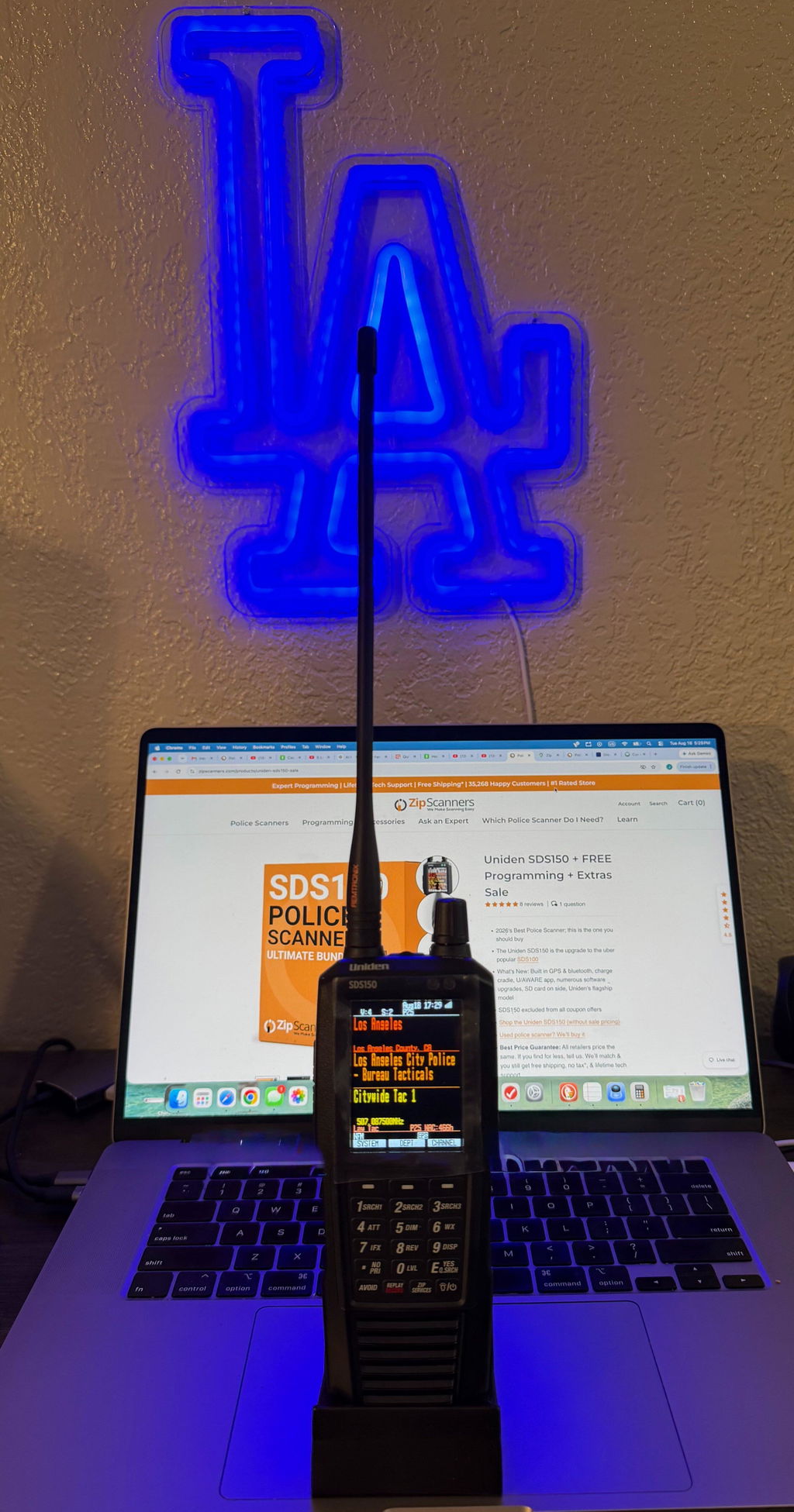
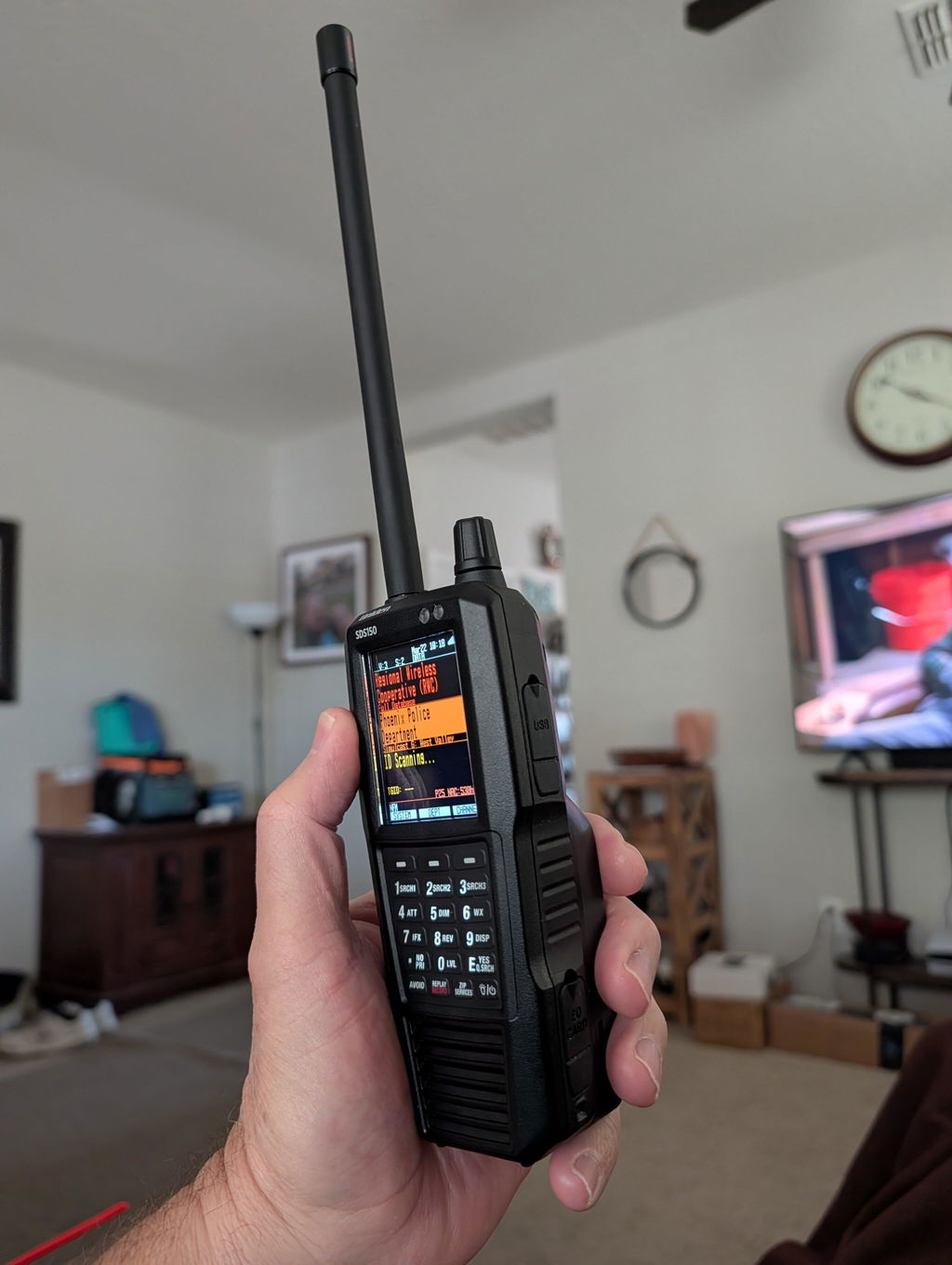
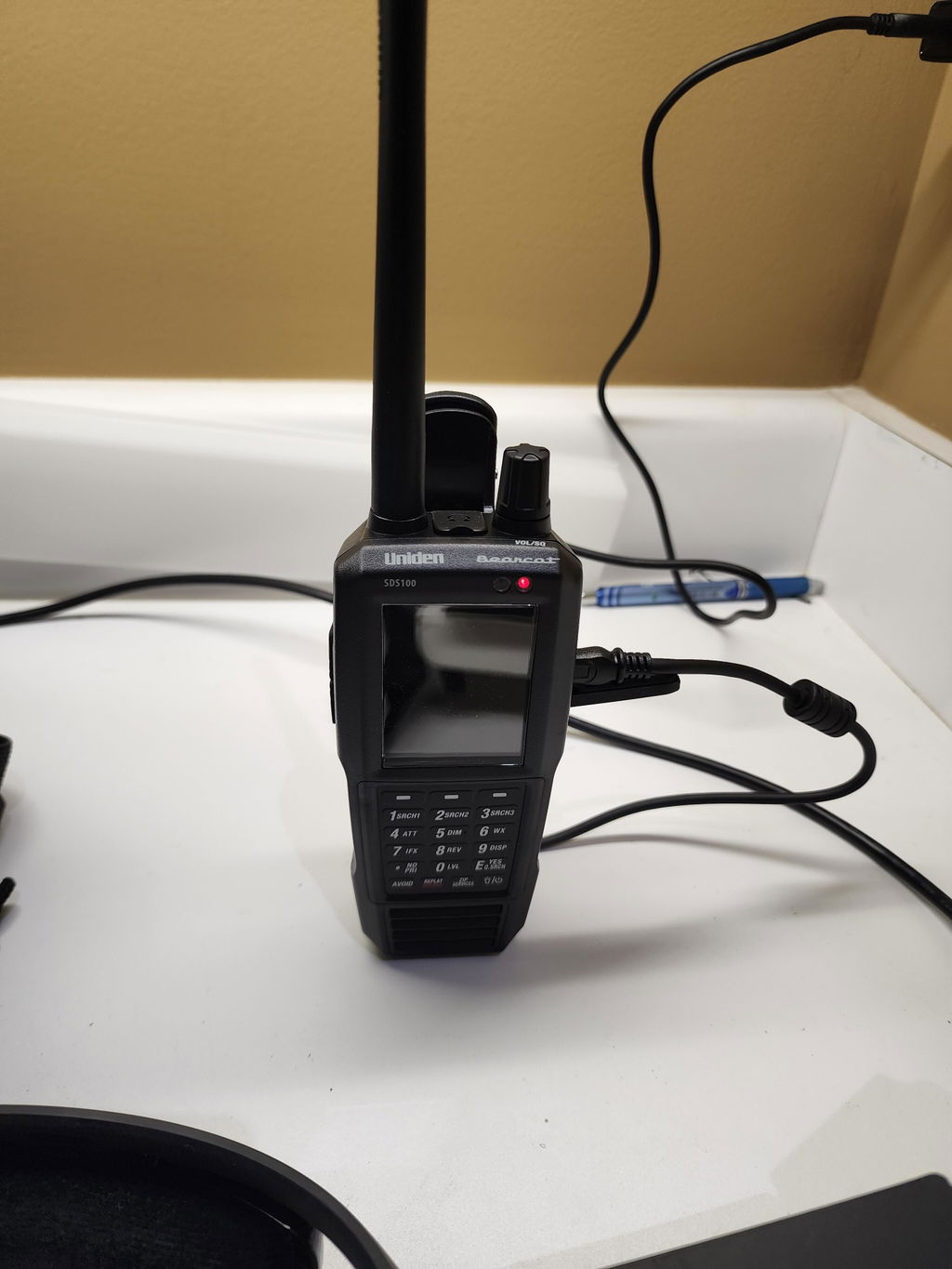
Short version: If you’re buying a police scanner in 2026, the SDS150 is the smart “buy once” move.
The SDS150 keeps the True I/Q platform that made the SDS100 a legend in simulcast areas, then upgrades the stuff you actually feel every day: built-in GPS, phone control + audio, USB-C, a dock-style charging cradle, & Waterfall upgrade included.
Why that matters: most people don’t quit scanning because the radio can’t decode. They quit because the workflow is annoying (cables, charging, SD card access, tiny-screen navigation, traveling across county lines). The SDS150 is built to remove those friction points.
The SDS150 has 7 practical advantages over the SDS100:
-
Built in GPS (GPS synced time): location based scanning without buying & connecting an external GPS puck. Great for travel, commuting across jurisdictions, & accurate timestamps in recordings/logs.
-
U/AWARE phone control + audio: full remote control on a big touchscreen, plus listen on your phone (& route audio to Bluetooth earbuds or your car via your phone).
-
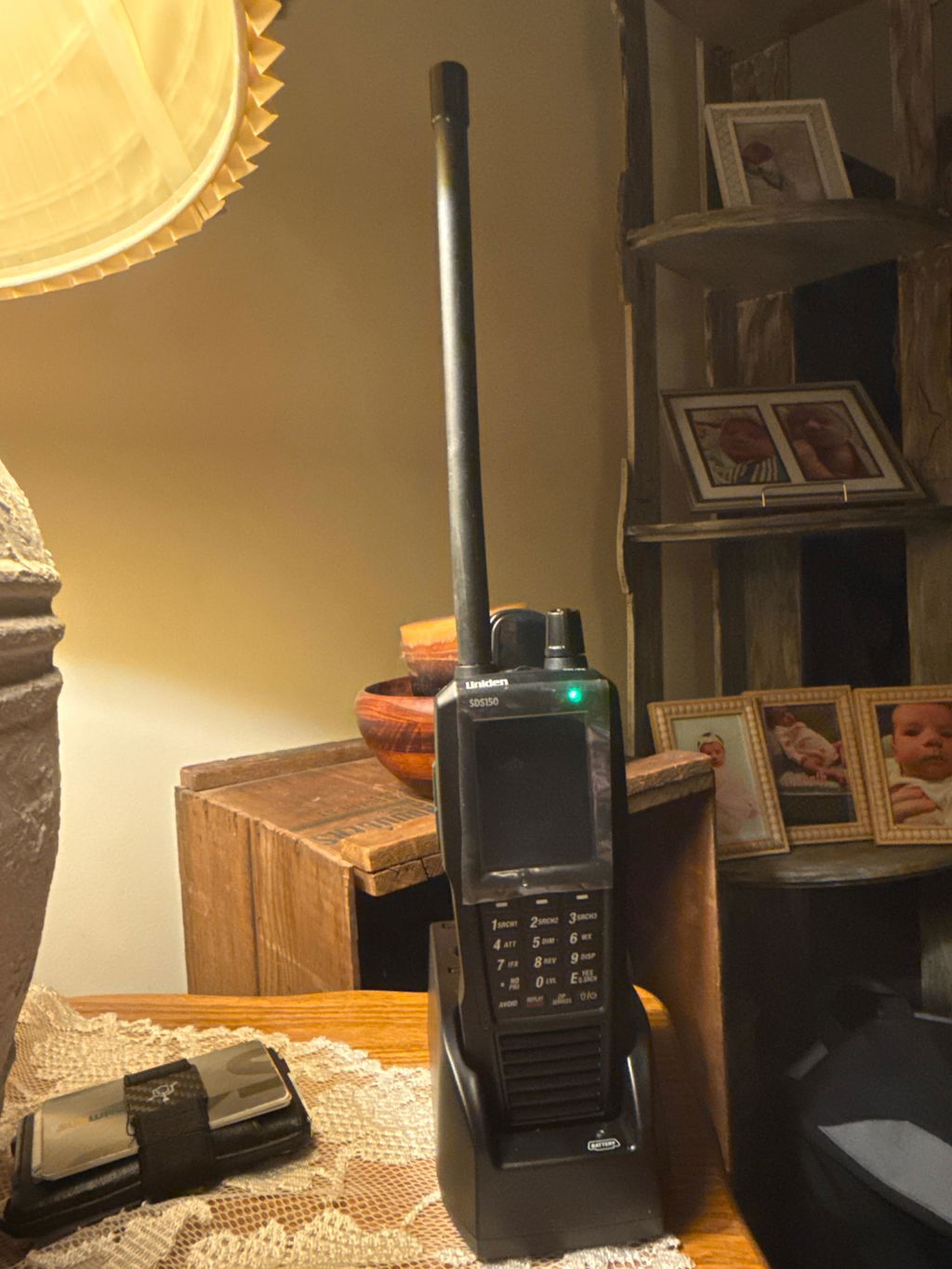
Charge cradle included: drop it in, walk away. The cradle can also charge a spare battery in the second slot (spare battery sold separately).
-
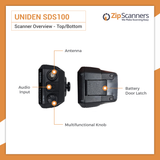
USB-C charging + programming: one modern cable standard for home, vehicle, power bank, & laptop.
-
Waterfall included: it ships unlocked. On the SDS100, Waterfall is a separate paid upgrade key.
-
Less 'filter fiddling' in messy RF: the SDS150 platform adds RF/IF changes aimed at reducing the need to hunt for the perfect filter setting in interference heavy areas.
-
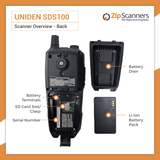
Side access microSD: faster SD swaps & updates without pulling the battery door off (small thing, big quality-of-life upgrade).
Price reality check: if you’re the type who will add GPS, a better charging workflow, & Waterfall to the SDS100 anyway, you end up close to SDS150 money fast. If you want the full-feature, low-hassle setup, start with the SDS150 & be done.
Both the Uniden SDS100 & SDS150 are premium True I/Q (SDR) handheld scanners designed for modern digital trunking & challenging simulcast environments. Neither scanner can decode encrypted police channels.
Quick decision
Choose the SDS150 if you want:
- The “buy once” flagship with the newest platform & the longest runway
- Built in GPS for true grab & go travel scanning (no puck, no cable)
- Phone/tablet control & audio via the U/AWARE app (big-screen control, easier channel discovery)
- Dock-style charging (cradle included) & USB-C everywhere
- Waterfall included out of the box
- Less tweaking in high-interference, RF-dense metro areas
Choose the SDS100 if you want:
- The lowest upfront price for True I/Q simulcast performance
- You mainly scan one area (home/desk) & you won’t use GPS or app control
- You’re fine with cable charging & mini-USB
- You’d rather add optional upgrades later (GPS, Waterfall, external charger)
Side-by-side comparison
| Category |
Uniden SDS100 |
Uniden SDS150 |
| Model position |
Flagship True I/Q handheld (established) |
Newest flagship True I/Q handheld (next-gen) |
| Launch window |
2018 |
2025 |
| Price |
$699.99 |
$949.99 |
| Receiver architecture |
True I/Q (SDR) |
True I/Q (SDR), updated platform |
| Simulcast + interference handling |
Excellent True I/Q performance (may require filter tuning in tough RF) |
Built for stable decoding in simulcast & high-interference areas, with platform changes aimed at reducing tuning/tweaking |
| Frequency coverage |
25–512 MHz, 758–824 MHz, 849–869 MHz, 894–960 MHz, 1240–1300 MHz |
| Trunking + digital |
TrunkTracker X, P25 Phase I & II, Motorola, EDACS, LTR |
TrunkTracker X, P25 Phase I & II, Motorola, EDACS, LTR |
| Paid digital upgrades |
DMR, NXDN 4800/9600, EDACS ProVoice (paid keys) |
DMR, NXDN 4800/9600, EDACS ProVoice (paid keys) |
| GPS / location scanning |
External GPS accessory |
Built-in GPS |
| Phone/tablet control |
No official app |
U/AWARE app via Bluetooth Low Energy (control + audio) |
| Waterfall display |
Optional paid unlock |
Included |
| Charging + ports |
Mini-USB charging & PC programming |
USB-C charging & PC programming |
| Included charging hardware |
USB cable (no cradle) |
Charge cradle with extra battery slot |
| microSD access |
Behind battery door |
Side access under rubber flap |
| Water resistance |
JIS4 / IPX4 |
JIS4 / IPX4 |
| Recording + replay |
Yes |
Yes |
| Encrypted police audio |
No |
No |
Key differences that actually matter
1) The daily workflow (charging, cables, SD card)
-
SDS150: dock it in the cradle, charge it, optionally keep a spare battery topped off, & the SD card is quick-access on the side.
-
SDS100: cable charging, no included cradle, SD access requires pulling the battery door.
Zip Scanners’ take: if you’ll actually use your scanner daily or weekly, the SDS150’s workflow is the upgrade that keeps you using it.
2) Phone/tablet control (easier listening)
-
SDS150: U/AWARE gives you real control, a big-screen UI, & audio on your phone (then to earbuds or car Bluetooth through the phone).
-
SDS100: no official app-based control/audio.
Zip Scanners’ take: this is the difference between “scanner hobby UI” & “modern device UI.” It’s also the cleanest way to listen discreetly in a vehicle or around the house.
3) GPS that you will actually use
-
SDS150: built-in GPS means travel scanning is always ready, no accessories, no cable mess.
-
SDS100: supports external GPS, but it’s an add-on.
Zip Scanners’ take: built-in GPS changes behavior. People skip external GPS. People use built-in GPS.
4) Waterfall included vs paid add-on
Zip Scanners’ take: if you like finding activity fast (air, rail, events, unknown freqs), Waterfall stops being “nice to have” & becomes “why didn’t I have this sooner.”
5) RF performance in the real world (simulcast + interference)
-
SDS100: proven True I/Q performance in simulcast & weak-signal areas.
-
SDS150: Uniden positions the platform for stable decoding in simulcast & high-interference environments, plus early owners report less tweaking & clearer audio in RF-dense areas.
Zip Scanners’ take: both are elite. The SDS150’s edge is “less messing around to get the same or better result.”
6) Price-to-performance (the honest framing)
-
SDS150: costs more, but bundles the upgrades most users end up wanting anyway (GPS, dock charging, app control, Waterfall, USB-C, SD access).
-
SDS100: best value if you keep it simple & stationary.
Zip Scanners’ take: if you’re already spending $700+ for True I/Q, the SDS150 is the one & done flagship. The SDS100 is the “I know exactly what I’m giving up” option.