British Columbia Police Scanner Guide
Best Police Scanner for British Columbia, Canada: Frequencies, Systems & Recommendations
British Columbia stretches from the ferry terminals of the Salish Sea to the wildfire lookouts of the Interior, and a police scanner is one of the easiest ways to stay plugged into what is happening around you. Coastal storms, wildfire season, ski hill rescues, and everyday Lower Mainland traffic all move across the airwaves first.
BC's radio landscape is genuinely mixed. The Vancouver and Victoria core runs on a dense, mostly encrypted digital trunked system, while the Interior and North rely on a patchwork of conventional RCMP and fire frequencies. This guide breaks down what is actually on the air by region, what a scanner can and cannot pick up, and which Uniden model fits your part of the province.
British Columbia's Radio Systems at a Glance
Metro Vancouver and Greater Victoria run on a single linked system called E-Comm NGRP / CREST HRO Multizone, a Project 25 (P25) Phase II trunked network. E-Comm covers the Lower Mainland sites (Vancouver, Burnaby, Surrey, Richmond, the North Shore, and the Fraser Valley cities), while CREST covers the Capital Regional District (Victoria, Saanich, the Westshore, and the Saanich Peninsula). The two agencies operate it as one interoperable multizone system, which is why scanner owners usually talk about them together.
Outside that core, BC policing runs through RCMP detachments (the RCMP's BC division is known as E Division), and the picture changes by region. Interior cities like Kelowna run RCMP dispatch on conventional, non-trunked digital P25 repeaters rather than a wide-area trunked network. Smaller and more remote detachments further north and in the Kootenays still mix in older analog VHF. There is no single province-wide trunked police system the way some U.S. states run one statewide network. Think of BC instead as one large trunked metro core, plus dozens of smaller, regional-district-level RCMP and fire setups.
No scanner, ours included, can unlock a fully encrypted channel. Encryption status is the single biggest factor in what you'll actually hear.
Regional District Radio & Encryption Snapshot
Here is how the major regional districts break down. Encryption changes as individual detachments upgrade, so treat this as a starting point.
| Regional District | System | Encryption |
|---|---|---|
| Metro Vancouver | E-Comm P25 Phase II (trunked) | Police, fire & EMS: encrypted |
| Capital (Greater Victoria) | CREST P25 Phase II (trunked) | Police, fire & EMS: encrypted |
| Fraser Valley | RCMP & municipal, conventional | Police: encrypted. Fire/public works: open |
| Central Okanagan (Kelowna) | RCMP conventional P25 | Police: encrypted. Fire: open analog |
| Thompson-Nicola (Kamloops) | RCMP conventional | Police: mostly encrypted. Fire/SAR: open |
| Cariboo & the North | RCMP conventional, some analog | Police: mixed. Fire & forestry: mostly open |
| Vancouver Island (North/Central) | RCMP conventional | Police: mostly encrypted. Marine/fire: open |
Buying for a specific address? Search your regional district on RadioReference's British Columbia database for the current, detachment-level breakdown before you order.
Is a Police Scanner Legal in British Columbia?
Owning and listening to a scanner in Canada is common practice, and the radios are sold openly by retailers across the country, Zip Scanners included. The rule that actually matters is federal, not provincial. Canada's Radiocommunication Act allows you to receive radio signals, but Section 9 makes it an offence to divulge or profit from the contents of a communication that was not intended for you. Listening for personal awareness is one thing. Rebroadcasting or profiting from what you hear is another. Fully encrypted channels cannot be legally or technically decoded by any consumer scanner, so where a detachment has gone encrypted, that traffic simply is not available no matter which radio you buy. This is general information, not legal advice. For anything specific to your situation, a lawyer or the relevant government office can give you a definitive answer.
Best Police Scanners for British Columbia
Because so much of BC's core traffic runs on P25 digital, an analog-only scanner is a poor fit for this province. Uniden's SDS series is the standard recommendation because both models decode P25 Phase I and Phase II, including the simulcast trunking that E-Comm and CREST use across the Lower Mainland and Greater Victoria.
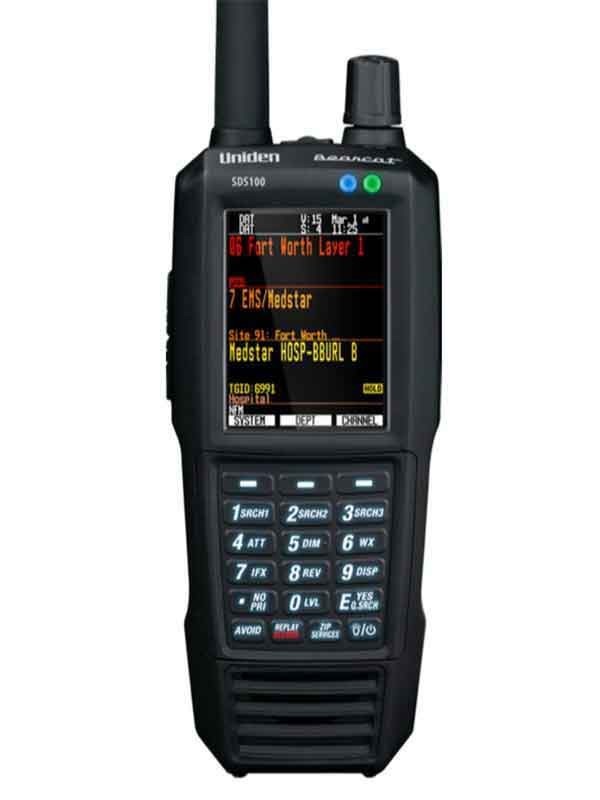
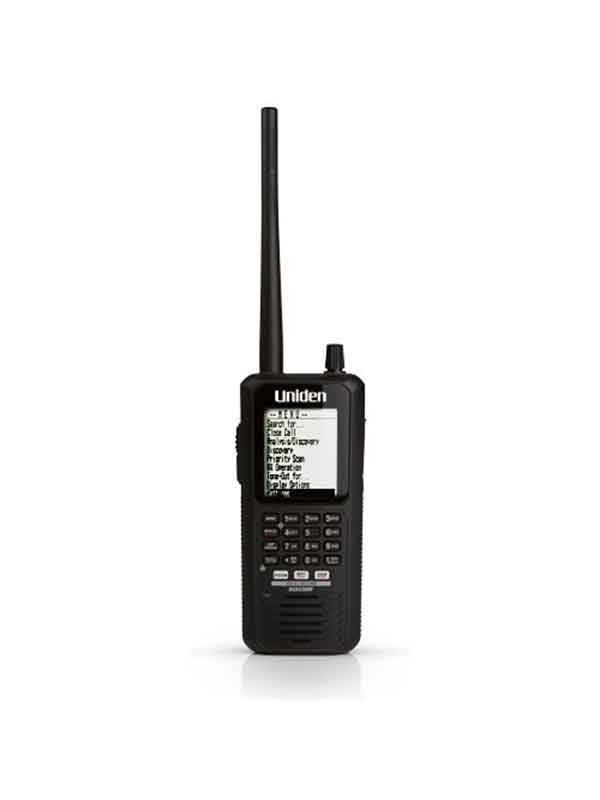
Uniden SDS100
Best for: portable, everyday carry
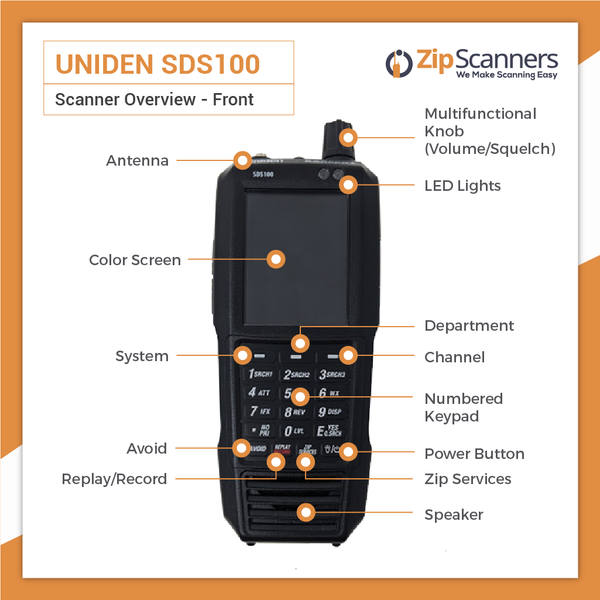
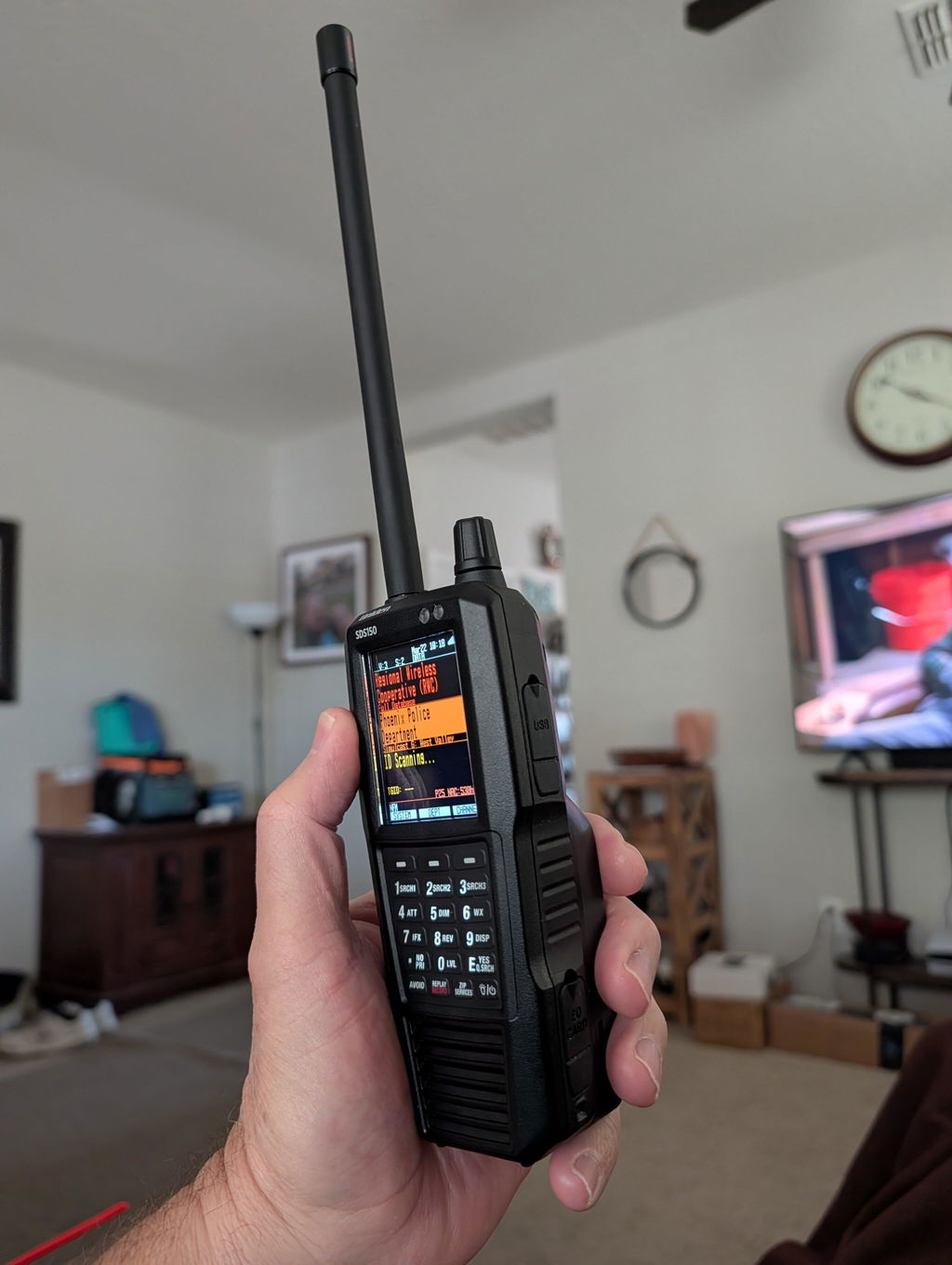
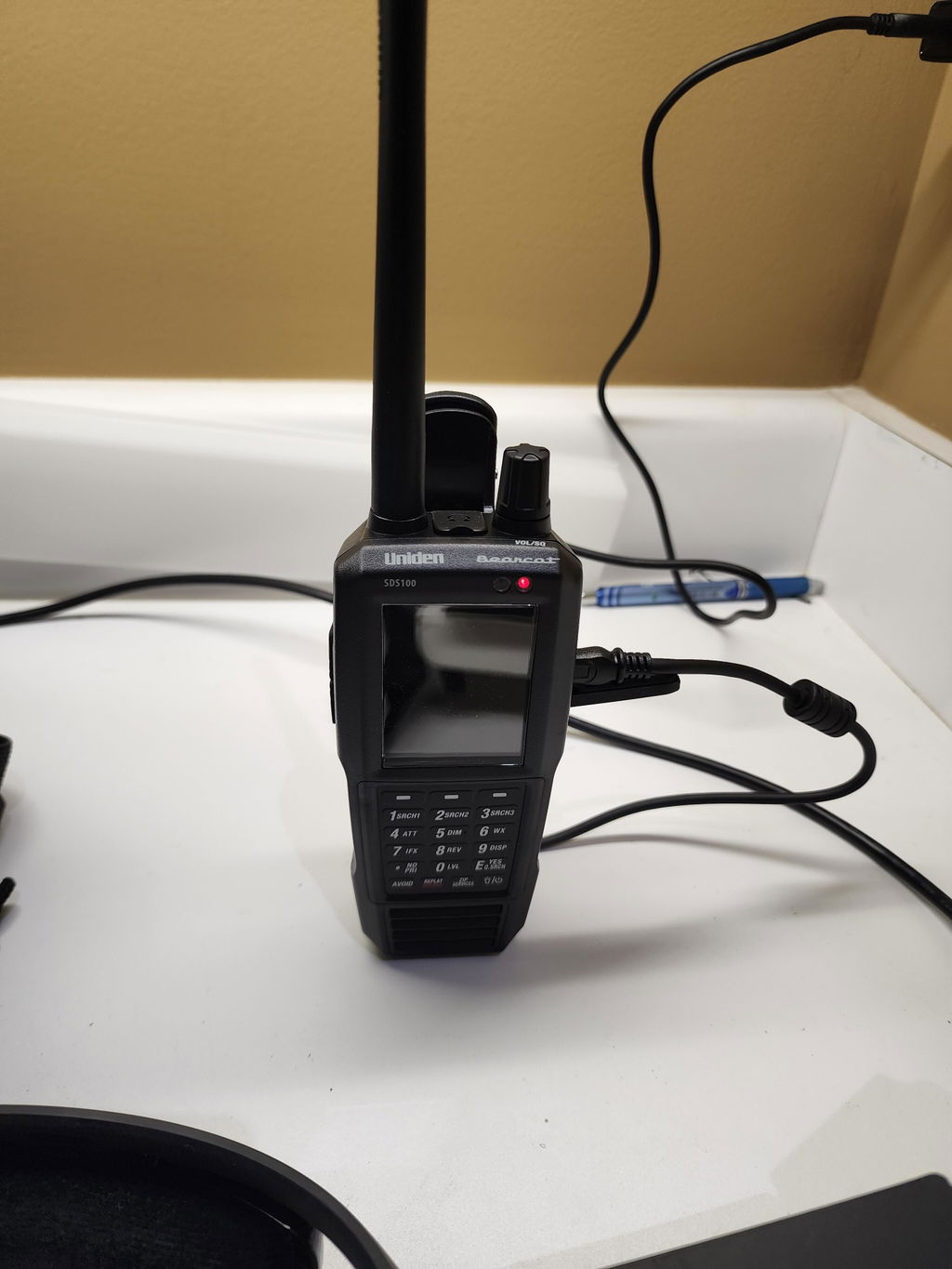
Uniden's handheld flagship, built on the True I/Q platform that made it the go-to radio for simulcast-heavy areas like the Lower Mainland. Small enough for a belt clip, glovebox, or cabin shelf.
Shop the SDS100Uniden SDS150
Best for: the smoothest day-to-day experience
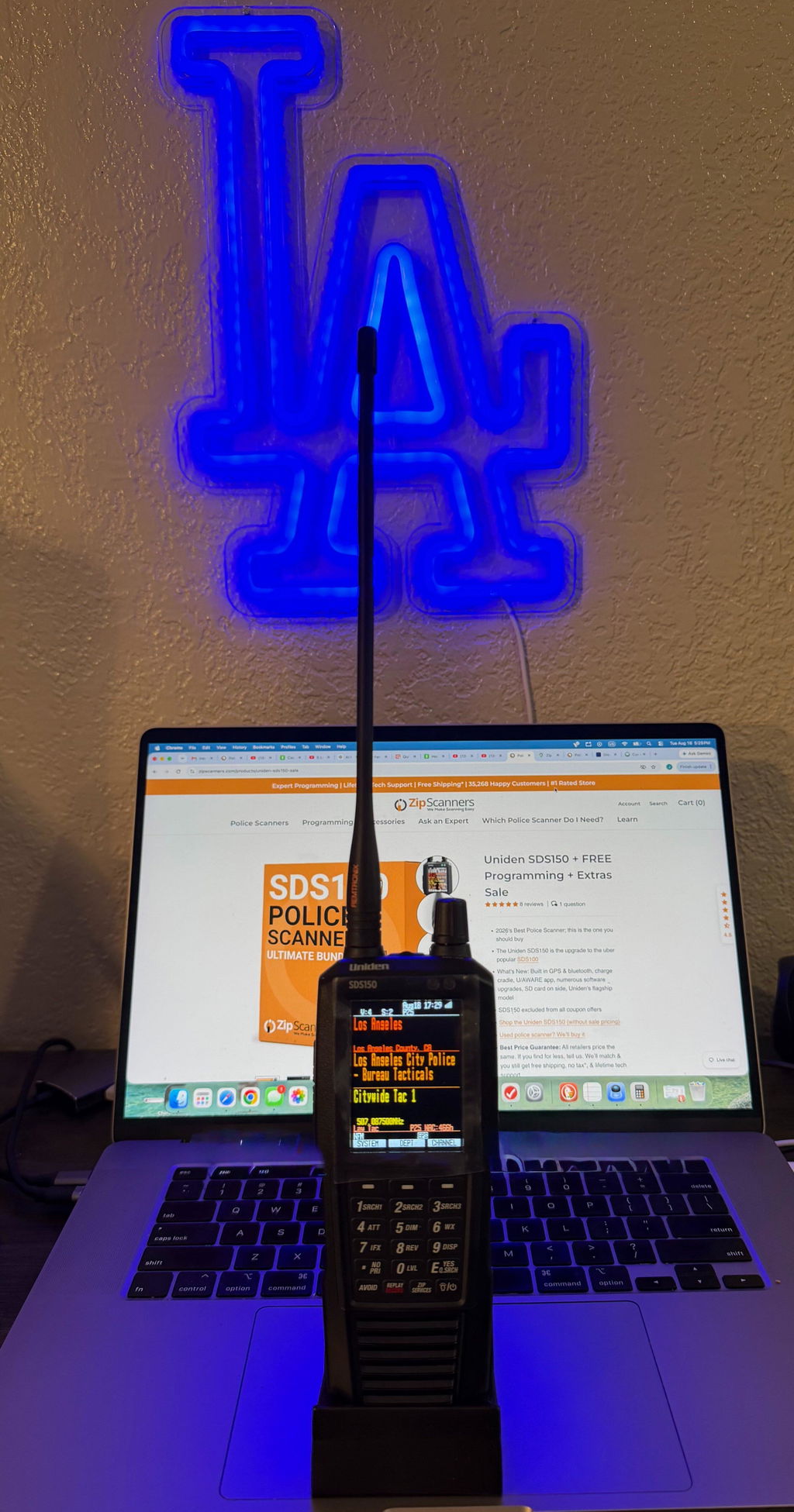
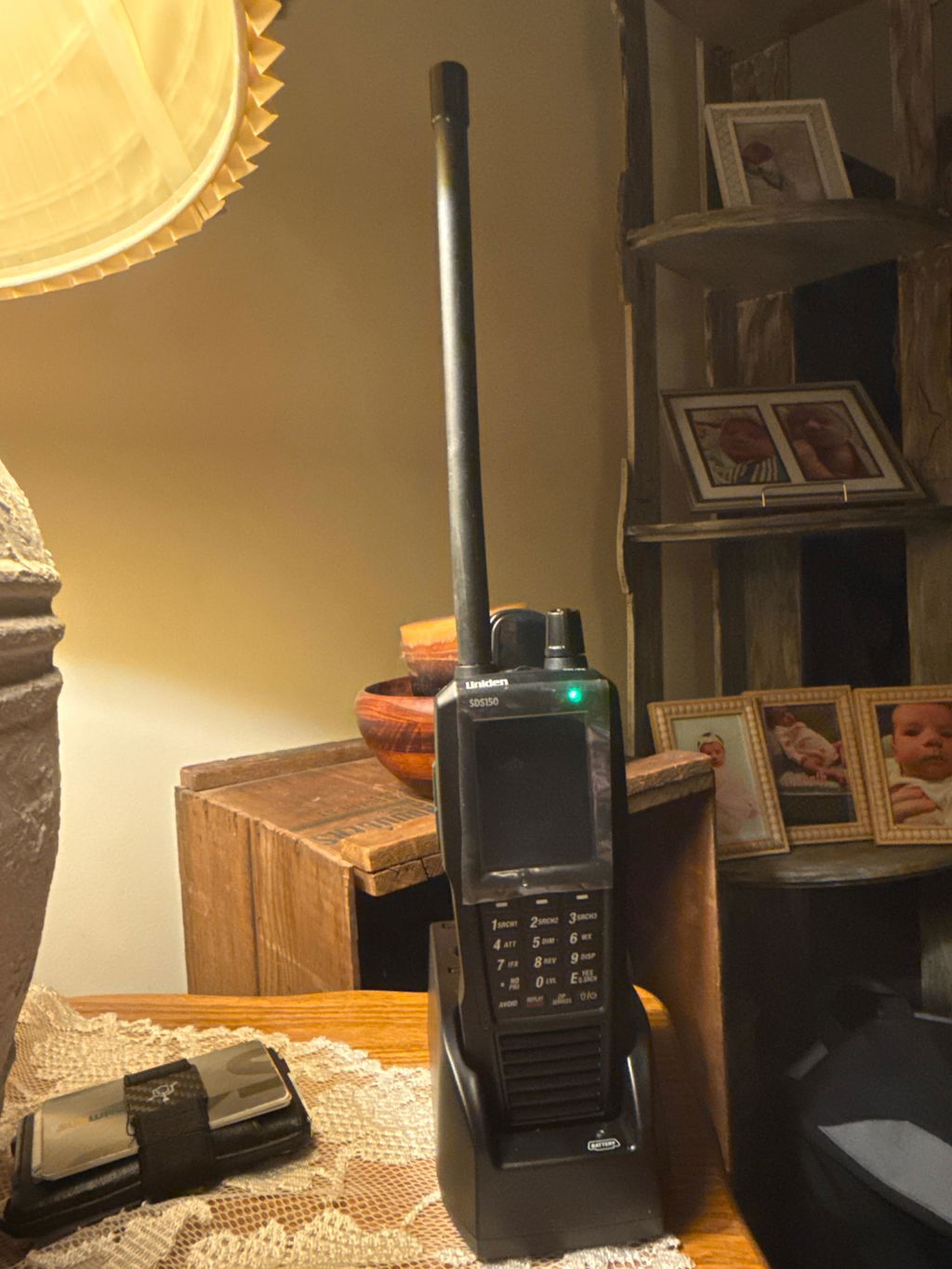
Uniden's newer flagship keeps the same True I/Q decoding and adds built-in GPS, Bluetooth, USB-C charging, a charging cradle, and the U/AWARE app for phone control. The one to buy once and stop shopping.
Shop the SDS150If you're inside Metro Vancouver or Greater Victoria, expect a scanner to open up fire, EMS-adjacent, transit, and marine traffic more reliably than police dispatch. In the Interior and North, where more channels remain in the clear, a scanner earns its keep on police, fire, and search and rescue alike. Not sure which model fits your address? Book a free call and we'll match a scanner to your regional district.
See Them in Action
▶
Unboxings, setup walkthroughs, and side-by-side comparisons of the SDS100 and SDS150 from our own team, on our own channel.
Watch on the Zip Scanners ChannelFrequently Asked Questions
Can a police scanner pick up encrypted BC channels?
No. Once a talkgroup is fully encrypted, no consumer scanner, including the SDS100 or SDS150, can decode it. That's a hardware and legal limitation, not a settings issue.
What's the best scanner for Metro Vancouver and Greater Victoria?
Either the SDS100 or SDS150 tracks the E-Comm/CREST P25 Phase II trunked system equally well. The SDS150 adds GPS and phone app control if you want the more modern experience.
Is a digital scanner legal to own in Canada?
Yes. Scanners are sold openly across Canada. The Radiocommunication Act restricts divulging or profiting from what you intercept, not simple ownership or personal listening.
Which parts of BC still have open, unencrypted police radio?
It varies by detachment and shifts over time. Smaller, more remote RCMP detachments in the Interior and North are more likely to still run analog or unencrypted digital than the Lower Mainland core. Check RadioReference for your regional district's current status before buying.
Not sure which scanner fits your BC address?
Book a free 15-minute call and we'll walk through your regional district's systems with you.
Book a Free CallGet BC Scanner Updates
Sign up for updates on regional district encryption changes and new scanner releases.
Helpful Resources
RadioReference: British Columbia database, for regional-district-level frequencies and system details.
RadioReference forums: British Columbia, for hobbyist discussion and the latest encryption change reports.